Recruitment
Myn Platform
Independent Recruiter
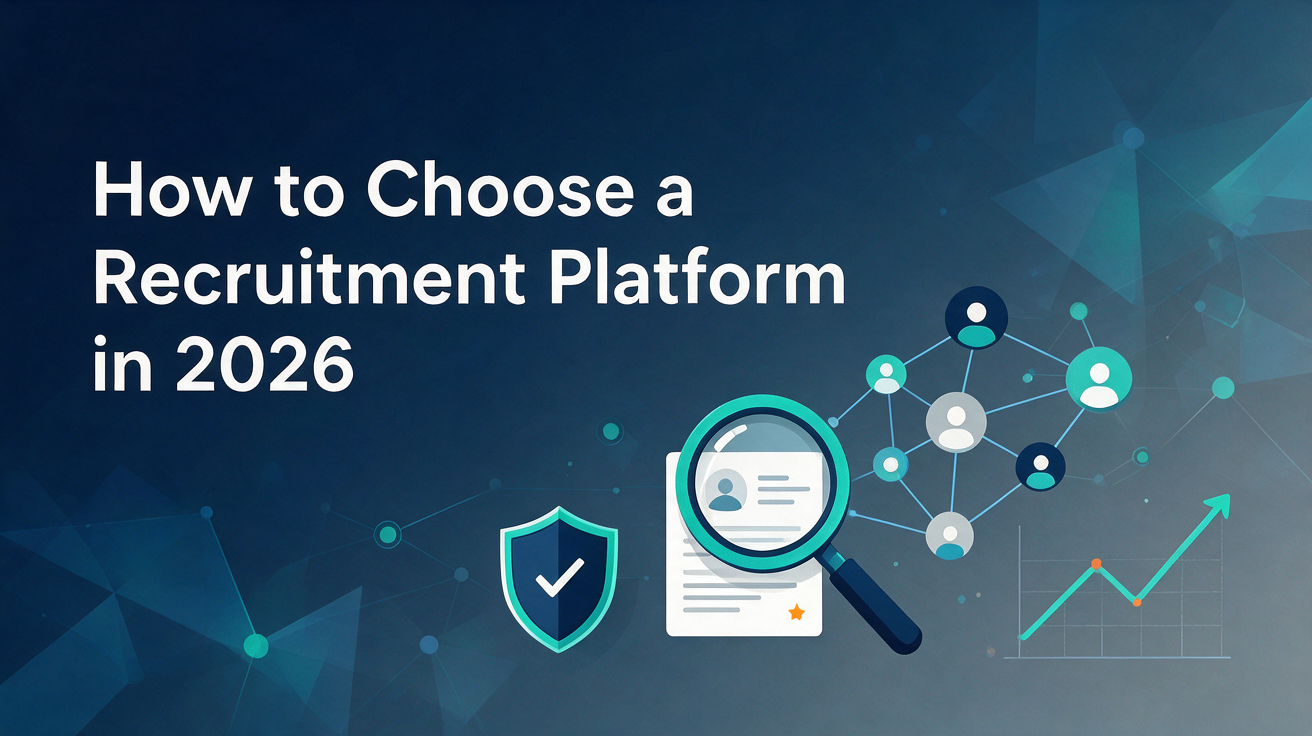

Choosing a recruitment platform when every vendor promises faster hiring and better candidates can feel like navigating a maze without a map. For staffing agencies, the stakes are higher than ever. Your platform choice directly affects sourcing speed, candidate engagement, and ultimately, the fees you keep at the end of each placement.
This guide walks you through the critical decision points for selecting a recruitment platform that actually fits how your agency operates. You'll find practical criteria, feature breakdowns, and questions worth asking before signing any contract.
A recruitment platform serves as the central hub where your agency manages vacancies, candidates, and client relationships. Unlike general HR software designed for internal hiring teams, platforms built for staffing agencies handle the complexity of working across multiple clients with different requirements.
The right platform connects your sourcing efforts directly to placement outcomes. It eliminates the manual work of copying candidate information between systems, chasing compliance documents, and reconciling timesheets with payroll.
For agencies placing contract or temporary workers, the administrative burden multiplies with every placement. A platform that automates these workflows frees your recruiters to focus on relationship building and closing deals.
Not every feature marketed as essential actually delivers value for staffing agencies. Focus your evaluation on capabilities that directly affect your placement speed and recruiter productivity.
Your candidate database represents years of relationship building. A recruitment platform should make this asset more valuable over time, not harder to maintain. Look for platforms that automatically enrich candidate profiles, track engagement history, and surface relevant matches when new vacancies arrive.
Talent pools organised by skill, availability, and engagement level help recruiters respond to client requests within hours rather than days. The difference between winning and losing a placement often comes down to who presents qualified candidates first.
Every application that sits unreviewed represents a candidate who might accept another offer. Application management features should include automated screening questions, configurable workflows, and clear visibility into pipeline status.
Workflow automation extends beyond candidate processing. The most effective platforms automate compliance reminders, interview scheduling, and client communications without requiring manual intervention at each step.
Clients expect real-time visibility into their open roles. A client portal that shows submitted candidates, interview feedback, and placement progress reduces the back-and-forth that consumes recruiter time.
Vacancy management should support the complexity of staffing work: multiple hiring managers per client, different rate cards, and varying compliance requirements by role type.
Compliance failures create liability and damage client relationships. Your platform should automate right-to-work checks, track document expiry dates, and maintain audit trails that satisfy client requirements.
For agencies placing workers in regulated sectors, compliance automation moves from nice-to-have to non-negotiable. Manual tracking simply cannot scale with placement volume.
AI has become a standard feature in recruitment platforms, but implementation quality varies dramatically. Some vendors apply basic keyword matching and call it AI. Others have invested in sophisticated models that understand context, experience progression, and skill transferability.
Ask vendors to explain what data trains their matching models. Platforms using pre-trained embedding models may struggle with industry-specific terminology. Those with bespoke embedding models trained on recruitment data typically deliver more accurate matches.
Request a demonstration using your actual job descriptions and candidate profiles. The results will reveal whether the AI understands the nuances of your placements or simply returns keyword matches.
The most effective AI implementations keep human judgment in the loop. Automated candidate ranking should surface relevant profiles, not make final decisions. Recruiters bring context that algorithms miss: cultural fit, career trajectory, and the soft factors that determine placement success.
Myn's approach combines AI-powered matching with access to 500+ vetted human recruiters, ensuring that automated efficiency does not sacrifice the judgment that complex placements require.
A recruitment platform with impressive features becomes a burden if it cannot connect with your existing tools. Integration capability determines whether your new platform creates efficiency or adds another disconnected system to manage.
If you already use a specific ATS or CRM, verify that your target platform integrates bidirectionally. One-way data pushes create duplicate entry and synchronisation headaches that compound over time.
Look for platforms that integrate with common systems like Bullhorn, Fieldglass, and Coupa. Native integrations typically perform more reliably than third-party middleware connections.
For agencies placing temporary workers, payroll integration eliminates one of the most time-consuming administrative tasks. The ability to flow approved timesheets directly into payroll and invoicing reduces errors and accelerates cash flow.
Some platforms go further by offering funding services that bridge the gap between contractor payment dates and client payment terms. This capability can remove a significant cash flow constraint for growing agencies.
Pricing models vary widely across recruitment platforms. Some charge per user, others per job post, and some take a percentage of placement fees. The right model depends on your agency's structure and growth plans.
The advertised price rarely tells the full story. Factor in implementation costs, training time, integration development, and ongoing support fees. A platform with a lower monthly cost may prove more expensive over three years once you account for add-ons and professional services.
Ask specifically about: job board access fees, LinkedIn Recruiter licences, compliance module charges, and API access costs. These items often appear as surprises after contracts are signed.
Platforms charging fixed monthly fees regardless of your success have different incentives than those earning a share of your placements. Neither model is inherently better, but understanding the alignment helps you predict vendor behaviour.
Myn operates without setup or membership fees, instead taking a small, transparent success fee. This model means the platform succeeds only when you do, creating natural alignment around placement outcomes.
Your platform choice today should support your agency three years from now. Scalability encompasses both technical capacity and commercial flexibility as your placement volume increases.
Ask vendors about system performance under load. How many concurrent users can the platform support? What happens to search response times when your candidate database reaches 100,000 profiles?
Cloud-based platforms typically scale more gracefully than on-premise installations. However, cloud deployment alone does not guarantee performance at scale. Request specific performance metrics rather than accepting general assurances.
Per-user pricing can become punitive as you add recruiters. Volume-based models may penalise success by increasing costs as placements grow. Look for commercial terms that reward growth rather than taxing it.
The ability to add services incrementally matters too. You may not need enterprise features today, but your platform should offer a clear path to capabilities like MSP services and VMS functionality as your client relationships expand.
Your recruitment platform shapes how candidates perceive your agency. Clunky application processes, poor mobile experiences, and communication gaps damage your employer brand and reduce candidate engagement.
Candidates increasingly apply and communicate via mobile devices. Your platform should deliver a seamless mobile experience for job search, application submission, and ongoing communication.
The candidate interface reflects on your agency. A modern, intuitive experience signals professionalism. An outdated interface suggests an agency that has not kept pace with technology expectations.
Automated communication keeps candidates informed without requiring manual recruiter effort. However, automation should enhance rather than replace human connection.
Look for platforms that support personalised templates, scheduled messaging, and centralised communication history. Candidates who feel informed and valued become repeat placements and referral sources.
Technology is only part of the platform decision. The vendor relationship determines how quickly issues get resolved and how well the platform evolves to meet your changing needs.
Ask about implementation timelines and resource requirements. Some platforms deploy in days, others require months of configuration. Understand what your team needs to contribute versus what the vendor provides.
Training quality directly affects adoption. Request details about training delivery, ongoing learning resources, and support for new team members who join after initial implementation.
Support response times matter when issues affect your recruiters' productivity. Clarify support hours, escalation paths, and typical resolution times for different issue types.
Ask about the product roadmap. Platforms with active development teams continuously improve. Those in maintenance mode may meet today's needs but fall behind as the market evolves.
A structured evaluation process helps you compare platforms fairly and avoid decisions driven by sales presentations rather than actual fit.
Document your must-have requirements, nice-to-have features, and deal-breakers before speaking with vendors. This preparation prevents scope creep during evaluation and keeps conversations focused on your actual needs.
Involve recruiters in requirements gathering. They understand daily workflow pain points that may not appear on feature lists but significantly affect productivity.
Generic demonstrations show best-case scenarios. Request demonstrations using your specific workflows, job types, and candidate scenarios. The realistic demo reveals how well the platform fits your actual work.
If possible, arrange trial periods with real usage. A week of actual use reveals more than hours of demonstrations. Pay attention to which features your team actually uses versus which they ignore.
Ask vendors for references from agencies similar to yours in size, sector, and placement type. Generic references from large enterprises tell you little about fit for your specific situation.
Research independent reviews and user forums. Current users share candid feedback about implementation challenges, support quality, and issues that never appear in vendor presentations.
Selecting a recruitment platform requires balancing immediate needs against future growth, feature depth against usability, and cost against value delivered. The best choice depends on your agency's specific workflows, client requirements, and growth ambitions.
Start with your most pressing operational challenges. Whether that's candidate sourcing speed, compliance automation, or integrated payroll, let your pain points guide the evaluation. Features that do not address actual problems create complexity without value.
Consider the total relationship, not just the technology. Vendor partnership quality, commercial alignment, and support capability matter as much as feature lists. A slightly less capable platform from a strong partner often outperforms a feature-rich option from a vendor that disappears after the sale.
An ATS focuses primarily on tracking applicants through hiring stages. A recruitment platform typically includes ATS functionality plus broader capabilities like CRM, candidate sourcing, compliance management, and often payroll integration. Staffing agencies generally need the wider feature set that recruitment platforms provide.
Implementation timelines range from a few days for cloud-based platforms with standard configurations to several months for enterprise deployments with complex integrations. Myn's platform deploys live within 24 hours with no IT involvement required, significantly accelerating time to value for agencies.
AI features add value when they genuinely reduce time-to-hire and improve match quality. However, agencies should evaluate AI claims carefully. Myn's AI-powered matching and automated workflows reduce time-to-hire by around 40% through a bespoke embedding model trained specifically for recruitment data.
Priority compliance features include automated right-to-work verification, document expiry tracking, audit trail maintenance, and credential management. For agencies placing workers in regulated sectors like healthcare, these features prevent compliance failures that create liability and damage client relationships.
Request specific performance data about system capacity, concurrent users, and database size limits. Review commercial terms for how pricing changes as you grow. Myn's cloud-based platform is industry-agnostic and scales from independent recruiters to enterprise MSP deployments without architecture changes.
Ask to see workflows using your actual job types and candidate scenarios. Request demonstrations of integration with your existing tools. Enquire about typical implementation timelines for agencies your size. Ask current users about support quality and issue resolution speed.